
As spring begins to awaken the world around us, it’s easy to get carried away with the watering can, excited to see those vibrant greens flourish in our indoor spaces. Picture this: a sunny afternoon, surrounded by freshly sprouted leaves and aromatic blooms, but wait! There’s a hidden menace lurking beneath the soil—overwatering. It often starts with the best intentions, stemming from our desire to nurture our plants, but this practice can lead to unwanted consequences.
Understanding the Risks of Overwatering 🌧️
Overwatering isn’t just about drowning your plants in one go; it’s a chronic issue that arises from excessive moisture over time. When the soil remains too wet, roots struggle to breathe, leading to problems like root rot and inviting pesky fungi to invade. The result? Alarmingly stressed leaves, sluggish roots, and a potting mix that refuses to dry out. Recognizing the difference between necessary hydration and harmful excess is vital for plant health.
Key Indicators of Overwatering 🧐
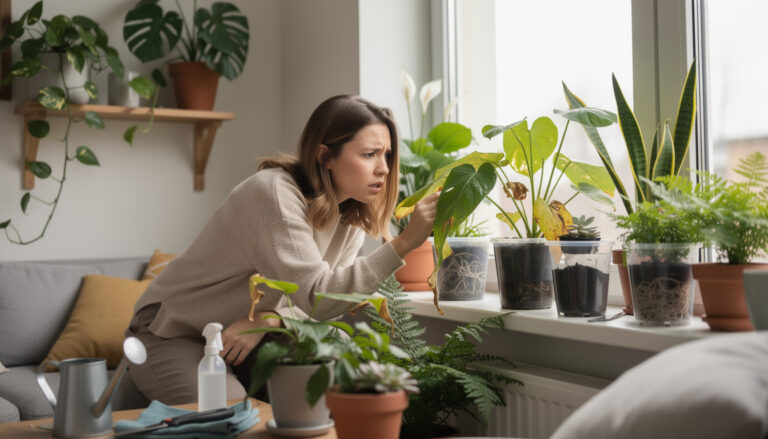
- Leaf Yellowing: New leaves often turn yellow from the base, while the veins might stay green.
- Mushy Stems: Petioles or stems might feel soft, indicating decay.
- Odour Alert: A sour, swampy smell is a tell-tale sign of moisture issues.
- Fungus Friends: Watch out for fungus gnats hovering above your pots.
“Nature does not hurry, yet everything is accomplished.” – Lao Tzu 🌱
Learning from Watering Practices 💧
Most instances of overwatering stem from a strict watering schedule rather than responding to plant signals or checking the soil. Nature is not uniform; humidity, temperature, and light conditions vary daily, affecting how quickly the soil dries out. To dodge the pitfalls, gardeners should adapt their watering frequency to seasonal cues and plant needs.
Choosing the Right Pot and Soil 🪴
The choice of pot is pivotal. A pot that’s too large can keep water trapped longer than your plant’s roots can use. Ideally, select a pot only one to two inches larger than the root ball. Drainage is essential; pots without holes will quickly become a swamp. Opt for a good-quality potting mix that blends moisture-retaining particles with chunky pieces to create air channels, preventing that dreaded soggy situation.
Simple Method to Grow Vegetables Even in a Tiny Space
The Path to Recovery from Overwatering 🌿
If overwatering has already occurred, take immediate action! First, assess the signs. If two or more indicators are present, it’s time to step in. Gently remove the plant from the pot, inspect the roots, and trim away any that are soft or blackened. Re-potting in fresh, dry soil that promotes soil drainage can dramatically improve your plant’s resilience. Be patient; recovery takes time, and while the plant might look forlorn, it can bounce back with your support.
Practical Tips for Effective Watering 📝
To establish a disciplined watering routine, consider the following:
- Check moisture at root depth with your finger.
- Lift the pot to gauge its weight—plants should feel lighter before a drink.
- Water deeply but allow the mix to dry slightly between drinks.
- Use room temperature water to avoid shocking the roots.
Taking Control of Your Indoor Garden 🌷
With a little mindfulness and attention, it’s possible to maintain a vibrant indoor garden while steering clear of overwatering pitfalls. Monitoring plants’ needs, adjusting your routine based on their signals, and maintaining the right conditions will ensure you cultivate a thriving green oasis.